

Buying may seem simpler than renting until the event is over and the chairs, tables, or décor need somewhere to go. When comparing renting event furniture vs buying it, consider how often you’ll use each item and whether you can manage its storage, transportation, cleaning, and upkeep.
It makes sense to want furniture that suits your event without paying for items you’ll rarely use. Renting can suit one-time celebrations and changing styles, while buying may work for items you use regularly and have room to store.
This guide explains how rental costs, delivery, storage, transportation, maintenance, and depreciation affect the decision. It also shows how combining owned essentials with rented guest-facing pieces can work, with practical considerations for events in Fresno and the Central Valley.
Key Takeaways
- Compare the full cost of ownership, including storage, transportation, cleaning, repairs, and the time needed to manage furniture.
- Buying may suit pieces you use often and can store; renting can make more sense for occasional events or changing styles.
- Before settling on a rental plan, account for delivery fees by location and confirm which setup or teardown services your package or quote includes.
- A hybrid approach can keep frequently used essentials on hand while letting you choose guest-facing furniture and décor to suit each event.
Here’s What Impacts Event Furniture Rental Pricing?
Rental costs depend on the selected pieces and event logistics, while ownership brings ongoing responsibilities. To compare renting event furniture vs buying it, weigh the rental terms against the space, labor, and care needed to own the furniture.
Rental Responsibilities
For a rental, choose the items you need, share your event details, and coordinate delivery and return arrangements. The agreement states who handles transportation, placement, and pickup. Delivery fees vary by location. Setup, styling, design, and teardown are included only when listed in a confirmed package or quote. Owners manage their furniture between events, including storage and routine care, whether or not it is in use.
Availability and Cancellation Risks
What are the risks of renting event furniture, including availability and cancellation policies? Desired items may not be available for your date, so confirm availability before finalizing your plans. Cancellation terms can affect costs if plans change. Review the agreement for deadlines, refund terms, substitutions, and responsibility for damage. How far ahead to reserve depends on event size, season, and complexity.
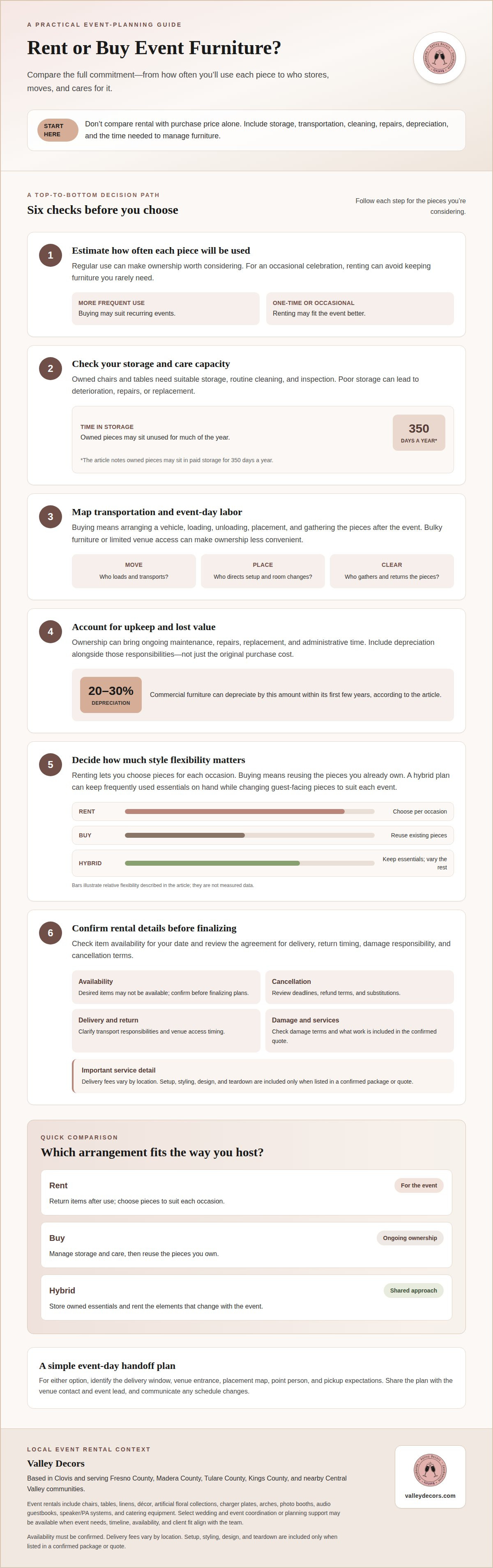
Compare both options using the same criteria: frequency of use, storage, transportation, maintenance, style flexibility, and event-day labor. For example, an organization with recurring events and storage space might buy basic pieces, then rent items that vary with each layout. A couple hosting one reception might rent select guest-facing pieces rather than store them afterward.
| Option | Commitment | Storage and care | Style flexibility |
|---|---|---|---|
| Rent | For the event | Return after use | Choose per occasion |
| Buy | Ongoing ownership | Owner-managed | Reuse existing pieces |
| Hybrid | Shared | Store owned essentials | Rent changing elements |
Renting event furniture vs buying is easier to assess when you compare the whole arrangement, not just the item price. Base your decision on how often you’ll use each piece and who will manage it afterward.
Storage, transportation, maintenance, and depreciation
Ownership costs go beyond the purchase price: storage, transport, care, repairs, and eventual replacement all affect the total. For a rental, check return timing, transport responsibilities, damage liability, cleaning expectations, and any charges for accidental or significant damage.
Storage and Maintenance
Owned chairs and tables need suitable storage, plus routine cleaning and inspection before reuse. Poor storage can cause deterioration and lead to repairs or replacement. Renting means you don’t keep the items after the event, while the agreement defines your responsibilities during use. Check how it handles normal wear and any additional fees for accidental or significant damage.
Transport, Setup, and Cleanup
Buying also means arranging a vehicle, loading, unloading, and labor for each event. These tasks can make ownership less convenient when furniture is bulky or venue access is limited. With either option, map delivery and return routes, schedule venue access, and identify who will move pieces between rooms. Include setup and cleanup labor in your comparison.
Owned Furniture Storage Costs
Compare that recurring expense with the space furniture occupies at home or onsite. Estimate the area needed for chairs, tables, and safe access. Owned pieces may sit in paid storage for 350 days a year, so frequent use matters. Buying can be smarter when storage and operating capacity already exist.
Commercial furniture can depreciate by 20-30% within its first few years. Include that lost value alongside maintenance, replacement stock, and administrative time, rather than comparing rental with purchase price alone. An organization that reuses the same furniture often may weigh depreciation differently from a couple planning one reception. To map rental logistics for a Fresno event, share your event details.
Delivery, setup, and breakdown services
Delivery and event-day labor affect how smoothly furniture fits the venue schedule. For a Fresno reception, plan for arrival, placement, guest access, and removal. Identify who will direct the delivery team and share the venue’s access instructions. Use the confirmed package or quote to understand which work is arranged.
For rentals, coordinate the delivery window with venue access and the event timeline. Give clear placement directions, such as which tables go in the dining area and which chairs are reserved for the ceremony. Confirm who will receive the items and who can respond to a late arrival or room change. A designated point person helps prevent conflicting instructions on event day.
With owned furniture, the host or organization coordinates every move. Assign people to load, transport, unload, and place the pieces, then decide who will gather them after guests leave. For example, a community group using tables for dinner and a presentation needs a plan to move them between room layouts. Allow time to load and clear the venue.
Make a short handoff plan covering the delivery window, venue entrance, placement map, point person, and pickup expectations. Share it with everyone responsible for the furniture, including the venue contact and event lead. If the schedule changes, tell them about the updated sequence. Renting event furniture vs buying involves different coordinators, but both options need clear responsibility so tables and chairs reach the right place at the right time.
Why Rent Instead of Buy Furniture for Events?
Renting may suit a one-time celebration, while ownership can fit a regular event schedule. To assess renting event furniture vs buying, compare each option across the item’s full working life.
Upfront Ownership Costs
Buying means committing funds before the event and choosing pieces that will remain useful afterward. That commitment may suit an organization with recurring programs and a consistent room layout. For a couple planning a reception, renting can match furniture to the event without requiring a plan for every item after the celebration. Consider whether each purchase has a clear next use.
Ongoing Ownership Expenses
After buying, someone must track inventory, schedule cleaning, and manage repairs. These tasks take time even when the furniture isn’t in use. A venue or organization with staff and established procedures may manage that work more easily than a household that hosts occasionally. Include the time needed to prepare items for each event, not just event-day labor.
Hidden Ownership Costs
Ownership can bring added demands as events change. A new layout may call for different pieces, while damage can require repair or replacement. Consider how changes in guest experience, room use, or design preferences could affect the furniture’s usefulness. Renting lets hosts choose pieces for a particular occasion instead of expanding permanent inventory whenever plans change.
Event Furniture Lifecycle Costs
Consider each item from acquisition through its final use. A couple may plan to reuse or resell a purchase; a business might use it across recurring functions. Renting event furniture vs buying can lead to different choices when event styles change often. Track how frequently each piece will serve its purpose, who will care for it between events, and whether the storage and operations support continued ownership. If you’re considering rentals for an upcoming celebration, discuss your event rental needs as you shape the plan.
Valley Decors
Valley Decors helps Fresno-area hosts plan event rentals around their guest list, venue, and furniture needs. Based in Clovis, it serves Fresno County, Madera County, Tulare County, Kings County, and nearby Central Valley communities. Rental options include chairs, tables, linens, tableware, and décor, helping hosts choose pieces that suit a specific event.
To explore options for your celebration, share your event date, city or venue, guest count, and rental wishlist. The team can help shape a rental plan around the items and event details you provide.
Make Your Next Event a Clear Decision Point
Use your next gathering as a practical test of your longer-term event needs. Which pieces belong in your regular operations, and which are better suited to a particular celebration? Your answer may change as your event calendar, venue plans, or design priorities evolve.
Choosing between renting event furniture and buying it doesn’t have to be permanent or all-or-nothing. Set a clear threshold for ownership: buy pieces with a defined role across future events, and keep occasional or style-specific needs flexible. Revisit that rule as your plans change.
Before finalizing your next layout, note which decisions need to be settled early and which can remain flexible. A focused rental wishlist turns the comparison into a practical plan without committing storage space to items you may rarely use.
With a plan that suits the way you host, you can focus on creating a gathering that feels like yours.
Frequently Asked Questions
Is it cheaper to rent or buy chairs for one event?
Renting can cost less overall for a single event if you won’t reuse or resell the chairs. Buying may be more practical if you have a clear plan to use them again, such as furnishing a community hall. Compare the rental total with the purchase cost, likely reuse, and potential resale value. Include chair transport and handling in either estimate.
What does it cost to rent event furniture in the United States?
There’s no single rental price: the total depends on the items, quantities, event date, delivery location, and services in the agreement. For a useful estimate, list the furniture and quantities needed for each area, such as dining, ceremony, and registration. Compare quotes using the same list and delivery details, rather than relying on a single item price.
How much does it cost to buy event furniture?
Purchase costs vary by furniture type, materials, quantity, and condition. Calculate the total for the exact items you need, then account for transport, storage, cleaning, repairs, and replacement over time. For example, a business furnishing a recurring meeting room may need different chairs from a family planning a one-time celebration.
When is renting event furniture cheaper than buying?
Renting may cost less for an occasional event, especially when the required style or layout changes each time. Consider a fundraiser that needs a different room arrangement from the organization’s regular meetings. Renting lets the event use that temporary setup without adding permanent inventory. Compare the event-specific rental total with the purchase and reuse plan before deciding.
What are the pros and cons of renting versus buying event furniture?
Renting provides temporary access to event pieces without leaving the host responsible for long-term storage, though selection and date availability can limit choices. Buying gives you ongoing access to the same items, but also makes you responsible for their condition and safekeeping. A practical middle ground is to own frequently used essentials and rent special pieces for a particular design or layout.
How should businesses estimate event furniture needs and storage costs?
Start with a floor plan and count seating and tables by area, separating guest seating from staff, speakers, or registration needs. Then measure the furniture’s storage footprint and consider access for loading and retrieval. Businesses in Fresno, Clovis, Visalia, Madera, Kingsburg, Selma, Hanford, Lemoore, Tulare, Shaver Lake, Prather, Sanger, Reedley, Dinuba, Orosi, Cutler, and Fowler can also compare event-by-event rentals with their recurring schedule.


